If you have never seen an osteopath before, you might be wondering what exactly falls within their scope. Is it just back pain? Is it like chiropractic or physiotherapy? The short answer is that osteopathic manual therapy covers a much wider range of conditions than most people realize. The longer answer is worth reading, because for many patients, osteopathy turns out to be the care they have been looking for without knowing it existed.
The Short Answer: More Than You'd Expect
Osteopathic manual practitioners treat the body as a connected system rather than a collection of separate parts. This means that rather than focusing only on the site of pain, an osteopath assesses how the bones, muscles, connective tissue, organs, and nervous system are all working together, and where restrictions or imbalances in that system might be creating symptoms elsewhere.
This whole-body approach is what makes osteopathic manual therapy effective for such a wide range of conditions. A headache might trace back to tension at the base of the skull. Digestive discomfort might connect to restrictions in the thoracic spine. Jaw pain might be driving neck tension that is being felt as a shoulder problem. Osteopathy looks for these patterns rather than treating symptoms in isolation.
Musculoskeletal Conditions
The most familiar territory for osteopathic treatment is musculoskeletal pain, and for good reason. Osteopaths regularly treat:
- Back pain and neck pain, including disc-related and postural causes
- Shoulder, hip, and knee pain
- Sciatica and nerve-related symptoms
- Sports injuries and repetitive strain conditions
- Muscle tension, joint stiffness, and postural complaints
- Arthritis-related pain and mobility limitations
Osteopathy for back pain, in particular, is one of the most common reasons patients seek care. The combination of soft tissue techniques, joint mobilization, and whole-body assessment often addresses the underlying pattern driving the pain rather than just the painful area itself.
Headaches, Migraines, and TMJ Dysfunction
This is where osteopathic care starts to distinguish itself from other manual therapies. A significant number of headaches and migraines have a structural component: restrictions in the cervical spine, the cranial bones, or the jaw that contribute to or drive the pain pattern.
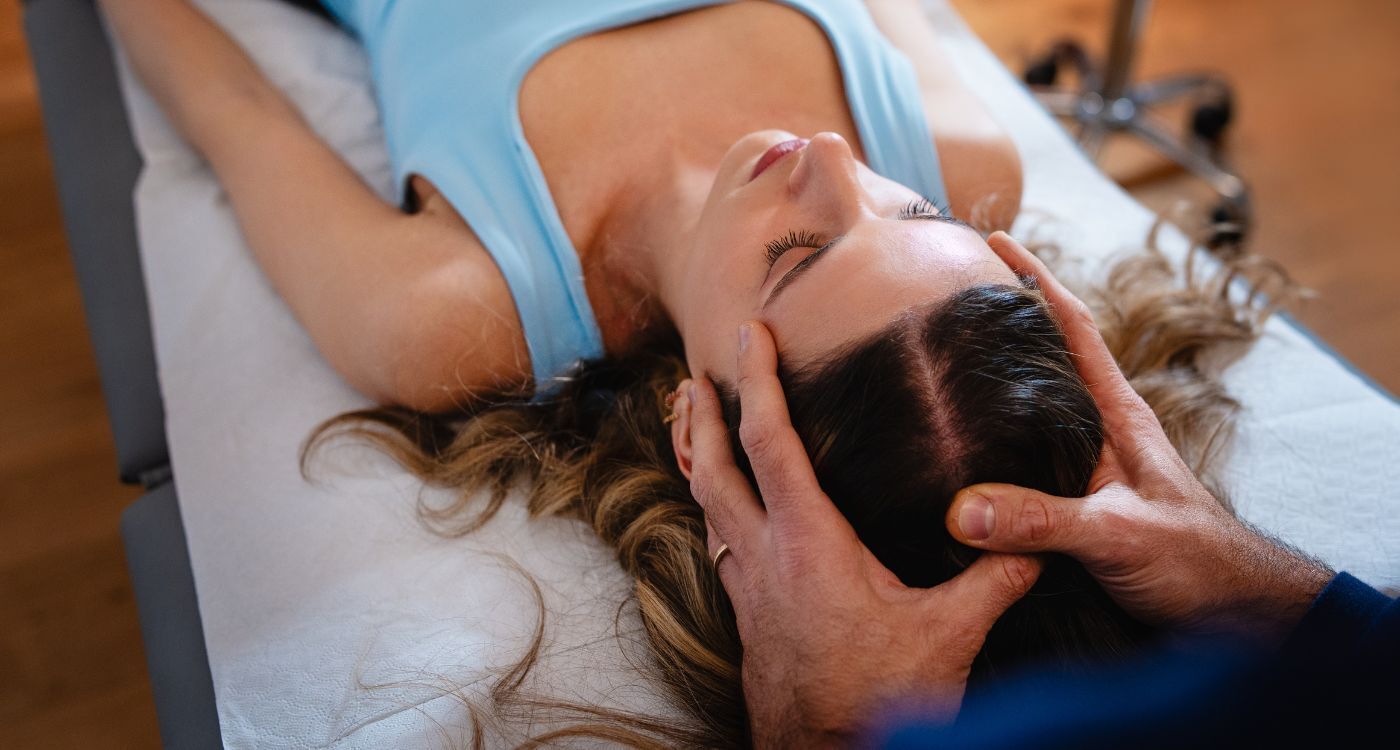
Osteopaths trained in craniosacral therapy and cranial techniques work directly on the head, which most manual therapists do not. This includes addressing the cranial bones, the membranes surrounding the brain and spinal cord, and for practitioners with intraoral training, the temporomandibular joint from the inside.
For patients with chronic headaches or migraines who have not found lasting relief through medication or other therapies, the structural dimension of their condition may not have been addressed. TMJ dysfunction follows a similar pattern: many patients have tried bite splints or jaw exercises without resolution because the joint mechanics and surrounding tissue have not been directly treated.
Concussion and Post-Concussion Syndrome
Osteopathy offers something that most concussion rehabilitation programs do not: direct treatment at the site of cranial impact. When a concussion occurs, the cranial bones, meninges, and surrounding connective tissue are physically affected by the force of impact. Standard rehabilitation focuses on graded return to activity and symptom management, but does not address these structural patterns.
Craniosacral and osteopathic cranial techniques work directly at the site of impact to restore normal motion in the cranial structures. Patients with persistent post-concussion symptoms, including brain fog, headaches, dizziness, and sensitivity to light and sound, often find that this approach moves their recovery when other interventions have plateaued.
According to research published in the Journal of the American Osteopathic Association, osteopathic manipulative treatment has shown promise in supporting recovery from concussion-related symptoms, particularly when standard care has not fully resolved the presentation.
Neurological and Systemic Conditions
Because the osteopathic approach works across body systems rather than within a single tissue type, it is relevant to a broader range of conditions than most people associate with manual therapy. Practitioners with advanced training treat:
- Tinnitus and cranial nerve dysfunction
- Digestive concerns, including IBS and bloating patterns with a structural component
- Lymphatic congestion and fluid retention
- Autonomic nervous system dysregulation, including chronic fatigue and stress-related presentations
This is not fringe territory. It reflects the core osteopathic philosophy that the body's systems are interrelated and that restoring mechanical balance supports the body's capacity to regulate and heal. Polyvagal and vagal nerve work, for example, is increasingly well supported by research on the relationship between the nervous system and chronic pain and illness.
Who Seeks Osteopathic Care?
Osteopathic patients in Brampton come from a wide range of backgrounds, but one pattern is common: many have already tried physiotherapy or chiropractic and found partial or temporary relief. They are often dealing with something that does not fit neatly into a single tissue or structure, or something that keeps coming back without a clear explanation.
Osteopathy tends to be sought by people who are looking for a more complete picture of what is driving their symptoms, and who are open to a treatment approach that considers the whole body rather than the presenting complaint alone. Patients range from active individuals managing sports injuries to office workers with chronic postural pain to seniors looking for gentle, effective care.
What to Expect at Your First Appointment
Your first osteopathic appointment begins with a detailed history and a full-body postural and movement assessment. Treatment follows directly, using whatever combination of techniques is appropriate for your presentation. Sessions typically run 45 to 60 minutes.
Osteopathic manual therapy is gentle compared to many manual treatment approaches. Some patients experience a mild sense of fatigue or temporary soreness following a session, particularly in the early stages of care. Most notice a shift in how they feel within the first few sessions.
If you are curious whether osteopathy is right for your situation, the best first step is simply to book an assessment. At Action Physiotherapy in Brampton, Paul McCrimmon, DOMP, brings nearly two decades of clinical experience and faculty-level training at the Osteopathic College of Ontario to every appointment.
Osteopathic care is available at Action Physiotherapy; book your appointment here.
